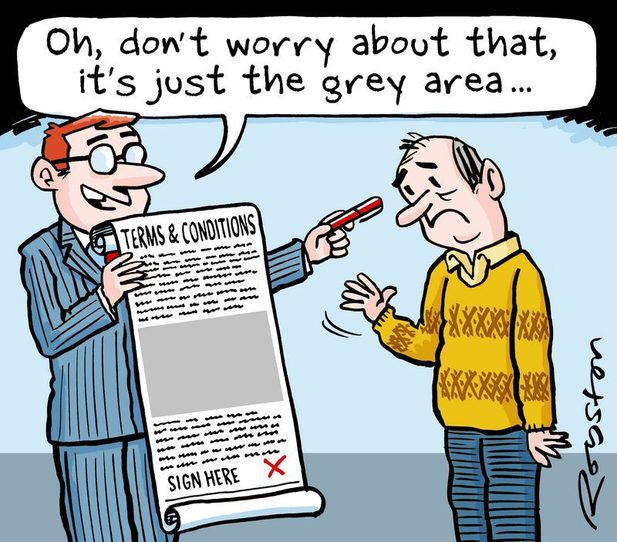
Freedom of contract is dying. With technology, contracts are impossibly long, one-sided monstrosities that are not even read according to multiple empirical studies (Stilp, 2026; Synder, et al., 2019; Ben-Shahar, 2009; Korobkin, 2003).
In research involving over 48,000 monthly visitors and 90 companies, less than 1/10th of 1% (.001) of buyers clicked on terms, usually spending less than two (2) minutes to view the contract (Bakos, et al., 2014). That means fewer than 10 people out of 10,000 made any attempt at all.
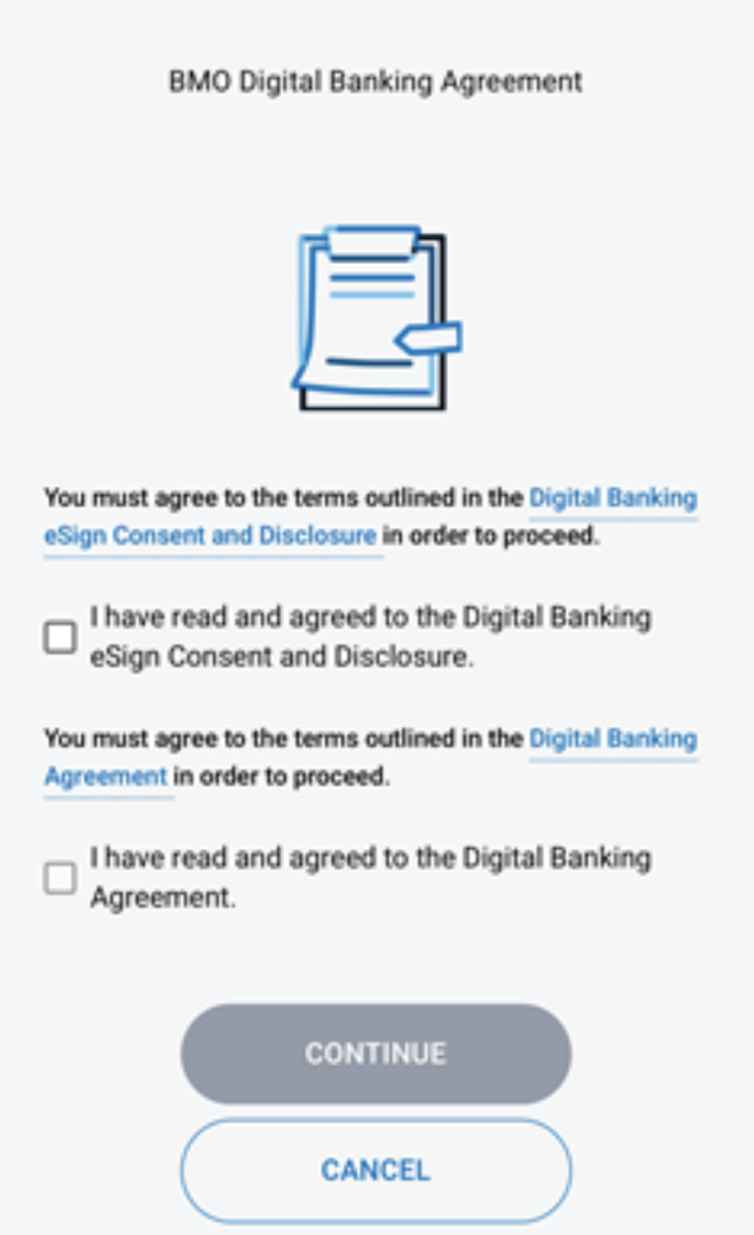
The findings of academic studies are not surprising. Consider this recent bank “Agreement” that states: “You must agree to the terms . . . “
If you “must agree,” there is no choice involved, other than walking away in a world growing full of “take it or leave it” contracts of adhesion. Even if contracts were read, the contract provisions cannot be changed. So, most people probably think, why bother?
Technology has made contracts worse. In the past, all contracts legally required “acceptance” of terms. Back then, acceptance meant “informed consent,” or as courts often said, a meeting of the minds as to the terms of the deal. But if the terms are not even read, there is no informed consent. There is no meeting of the minds.
The illusion of acceptance means merchants and companies sophisticated in contract matters are incentivized to include an array of particular clauses in their favor because these provisions will go unchallenged. With a click of a “yes” button, there is “acceptance” and the contract is completed.
There is no harm until the “gotcha” moment, and by then, it is too late to undo acceptance of terms they never understood nor even read.
But experienced counsel will know about remedies, such as revocation of acceptance (meaning the undoing of acceptance), rights of recission and rejection of terms. We have successfully handled hundreds of such cases where mistakes of the past can, in fact, be changed.
References
Bakos, Y., Marotta-Wurgler, F. and Trossen, D. (2014). Does anyone read the fine print? Consumer attention to standard-form contracts. The Journal of Legal Studies, 43(1), 1-35.
Ben-Sahar, O. (2009). The myth of the “opportunity to read” in contract law. European Review of Contract Law, 2009, 1-28.
Korobkin, R. (2003). Bounded rationality, standard form contract, and unconscionability. Univ. of Chicago Law Review, 70(4), 1203-1296.
Stilp, T. (2026). Contracts: The parol evidence rule and contract interpretation. Illinois Institute for Continuing Legal Education, §11.1.
Synder, F. and Mirabito, A. (2019). Boilerplate: What consumers actually think about it. Indiana Law Review, 52, 431-453.